
Key Highlights:
- Telemedicine apps have evolved beyond video calls, becoming intelligent healthcare platforms powered by AI, remote monitoring, and real-time data.
- Modern telemedicine app development focuses on workflows, not just features, ensuring doctors and patients can actually use the platform at scale.
- Choosing the right telemedicine app development company directly impacts cost, scalability, and compliance, especially as platforms grow.
Introduction
If you’re thinking about jumping into telemedicine app development in 2026, you’ve picked the perfect time.
The global telehealth market is projected to hit $455 billion by 2030, and patients are demanding digital-first healthcare solutions more than ever.
Telemedicine app development in 2026 isn’t about slapping a video call feature into an interface and calling it a day. It’s about solving real operational problems.
And, if you want to have one, then find out everything here.
In this comprehensive guide, we’ll break down everything you need to know about telemedicine app development in 2026, from must-have features and cutting-edge tech stacks to realistic cost breakdowns. We’ll explore what separates mediocre telehealth platforms from game-changing ones, and how AI-powered telemedicine app development is reshaping patient care.
What Is Telemedicine App Development?
Telemedicine app development is the process of building digital applications that let patients connect with doctors remotely, usually through video calls, voice calls, or chat.
Instead of visiting a clinic for every consultation, users can book appointments, share symptoms, upload reports, and get medical advice right from their phone or laptop.
These apps are designed to make healthcare more accessible and convenient, especially for people in remote areas or those with busy schedules. In simple terms, it’s about using technology to bring doctors and patients closer, without the need to be in the same physical space.
Must-Have Features of a Telemedicine App in 2026
Patient-Side Features
1. Simple Registration and Onboarding
Nobody wants to fill out 47 fields before booking their first appointment. Get the basics, name, contact info, insurance, and let patients schedule quickly. You can collect a detailed medical history later, right before their consultation. Some platforms now pull insurance information automatically, which saves everyone time and reduces errors.
2. Easy Appointment Scheduling
Patients need to see which doctors are available and when. Let them filter by specialty or specific providers. Send automatic reminders so people don’t forget their appointments. And here’s a big one: let them reschedule themselves without calling your office. This alone cuts down massive amounts of administrative work.
3. Video Consultations That Actually Work
Your video needs to work on crappy internet connections. It needs to work on old phones. It should automatically switch to audio-only if the connection gets bad, rather than just freezing. First-time users shouldn’t need to download anything or create an account just to join a call. These details matter more than you’d think.
4. Secure Messaging
Patients need a way to ask quick questions between appointments. Doctors need to check in about medication side effects or share follow-up instructions. Regular text messages won’t cut it; you need HIPAA-compliant messaging that’s encrypted and logged properly.
5. Prescription Management
Connect directly to pharmacies so doctors can send prescriptions electronically. Let patients see their current medications, request refills, and get notified when prescriptions are ready. This one feature can cut phone calls to your practice almost in half.
6. Medical Records Access
Give patients access to their visit notes, lab results, and test reports. But don’t just dump medical jargon on them. Present information in a way that normal people can understand. Add explanations for common terms. This builds trust and keeps patients engaged with their care.
7. Clear Payment Processing
Show patients what they’ll pay before they book. Break down what insurance covers and what’s out-of-pocket. Accept different payment methods, including HSA and FSA cards. Make it easy to save payment info for next time. Every extra step here is a chance for someone to give up and not complete their booking.
8. Multi-Language Support
Healthcare software development doesn’t happen in just one language. Your telemedicine mobile app development needs to support the languages your patient population actually speaks. This means more than just translating button labels. Some platforms now include real-time interpretation services built directly into video calls, which opens access to patients who’d otherwise struggle to get care.
Doctor-Side Features
1. Efficient Dashboard
Doctors don’t have time to hunt through menus. They need a dashboard that shows today’s schedule at a glance, upcoming appointments, and pending tasks all in one view. You can also include color coding, and the best dashboards also surface important information automatically: patients with upcoming appointment deadlines, overdue follow-ups, or abnormal test results that need attention.
2. Patient Management Tools
Providers need to see previous visit notes, current medications, allergies, lab results, and imaging reports all in one place. Good search functionality helps them find that patient who came in three months ago with similar symptoms, while flagging options identify high-risk cases needing special attention. The best systems also include batch actions for common tasks to simplify management.
3. Integrated EHR/EMR Systems
This is where most telemedicine app development solutions fail. If your platform doesn’t connect seamlessly with existing electronic health records, doctors end up documenting everything twice. That’s a deal-breaker. Real integration means consultation notes flow directly into the main patient record, prescriptions update medication lists automatically, and billing codes get captured without manual entry.
4. Clinical Documentation Tools
Voice-to-text for visit notes saves enormous amounts of time. You can provide templates for common conditions and the features to quickly add images, attach lab results, or reference previous visits. Some platforms now use AI to generate draft notes from the conversation, which doctors can review and edit. This can cut documentation time from 15 minutes per patient down to 3-4 minutes.
5. E-Prescribing with Drug Database
Send prescriptions directly to any pharmacy in the network with automatic drug interaction checking built right in. The system flags potential issues, allergies, contraindications, or dangerous medication combinations before the prescription goes through. It also checks insurance formularies in real-time, so doctors know upfront if a medication is covered, eliminating the frustrating cycle.
6. Flexible Scheduling and Calendar Management
Doctors need real control over their availability for administrative work, lunch breaks, or focused clinical hours without fighting the system. The platform should let them set different appointment lengths & good calendar systems sync with personal calendars so nothing gets double-booked, and they make it easy to squeeze in urgent cases or extend appointments when a patient needs more time.
7. Analytics and Performance Metrics
Data drives better decisions.
- How many patients are being seen daily?
- What’s the average wait time?
- Which conditions show up most often?
- When do no-shows happen most frequently?
This operational data helps identify bottlenecks and opportunities. So, make sure to include easy access to analytics for all the providers to ensure a seamless view, quick updates, and improved patient experience.
8. Mobile Access for Providers
Doctors aren’t chained to their desks. They need to check tomorrow’s schedule from home, review an urgent message between hospital rounds, or pull up patient information when they get a call at 9 PM. A solid telehealth app development strategy includes dedicated provider mobile apps that give secure access to essential functions without compromising patient data security.
Admin Panel Features
1. User Management and Role-Based Access
You’ll need centralized control over who can access what in the platform. Adding new doctors and support staff should take just a few clicks. Set up role-based permissions so the front desk can manage scheduling but can’t access clinical notes, while the billing team sees payment information but not medical records. The system should also track who accessed which patient records and when.
2. Appointment and Schedule Oversight
As you scale, someone on your team needs to see the big picture across all appointments and providers. Which doctors are overbooked? Where are the scheduling gaps you could fill? What patterns are showing up in cancellations or no-shows? Real-time monitoring helps you keep operations running smoothly when chaos inevitably hits.
3. Billing and Revenue Management
Track payments, process refunds, and manage insurance claims all from one place. See who owes what, spot payment trends, and generate financial reports. The system should automatically flag failed payments and integrate with your existing accounting software. When you’re evaluating the telemedicine app development cost in 2026, remember that solid billing features often pay for themselves by plugging revenue leaks you didn’t even know existed.
4. Compliance and Security Monitoring
If you’re handling patient data, HIPAA compliance isn’t optional. You can set up automated alerts for suspicious activity and regular security reports document your compliance when regulators come asking. The better telemedicine app development services include automated compliance checking that catches potential issues before they become expensive problems.
5. Content and Communication Management
You need control over what patients see, educational content, policy updates, and announcements. Manage your email and SMS templates for reminders and follow-ups without touching code. Send targeted messages to specific patient groups when needed. Update FAQs or help docs yourself instead of calling your telemedicine app development company for every small change.
6. System Configuration and Customization
You’ll want to adjust system settings without needing a developer every time. Update appointment types and durations, modify patient intake forms, configure insurance verification rules, or adjust the outflow of automated reminders. The more you can customize through the admin panel, the less you’re stuck waiting on external support for routine changes.
Telemedicine App Development Scope by Stage
Telemedicine platforms evolve in phases. Defining the scope clearly at each stage helps healthcare organizations control costs, reduce risk, and scale without disrupting clinical workflows. Below is a practical breakdown of how telemedicine app development typically progresses from MVP to enterprise-grade platforms.
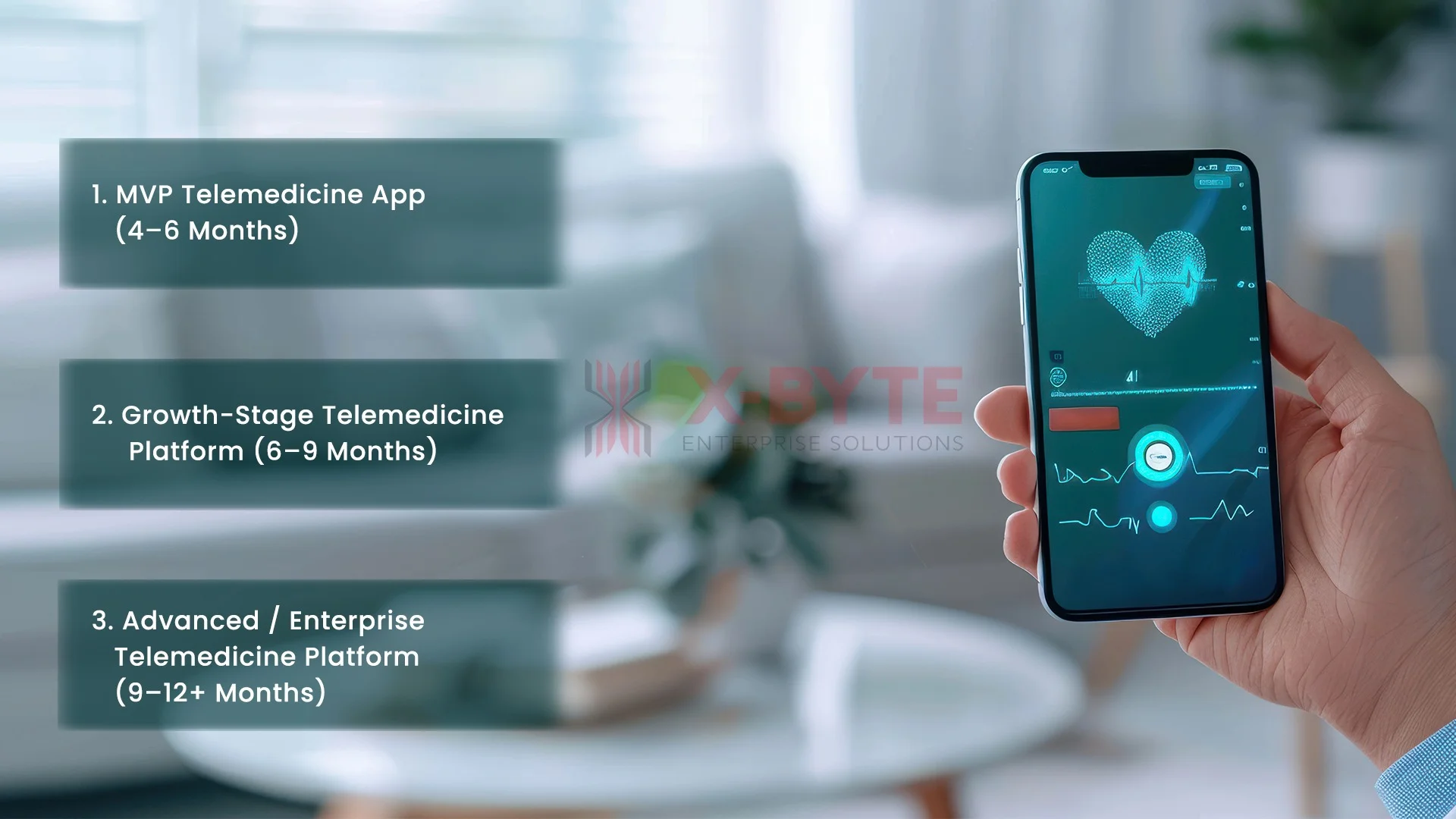
MVP Telemedicine App (4–6 Months)
Focused on validating virtual consultations with core, compliance-ready features.
- User onboarding and basic patient profiles
- Appointment booking and calendar management
- Secure video consultations (HIPAA-compliant)
- Basic admin panel for user and appointment control
- HIPAA-ready infrastructure with encrypted data handling
Growth-Stage Telemedicine Platform (6–9 Months)
Designed to improve operational efficiency and clinical workflows.
- EHR/EMR system integration
- Secure in-app messaging between patients and providers
- Payment processing and insurance workflows
- Provider dashboards for schedule and patient management
- Analytics and reporting for operational insights
Advanced / Enterprise Telemedicine Platform (9–12+ Months)
Built for large healthcare organizations and continuous care delivery.
- AI-assisted clinical documentation and note generation
- Remote Patient Monitoring (RPM) integrations
- Predictive scheduling to reduce no-shows and optimize capacity
- Advanced compliance automation and audit readiness
- Custom third-party integrations (labs, pharmacies, insurers)
Advanced Telemedicine Features for Competitive Advantage
If basic video consultations and appointment booking are your foundation, these advanced features are what truly differentiate a modern product in telemedicine app development.
1. AI-Driven Clinical Intelligence (Not Just Chatbots)
Advanced telemedicine apps go beyond symptom checkers. AI now actively supports doctors before, during, and after consultations. The app can auto-summarize patient history, highlight risk indicators based on past data, and suggest possible follow-up actions, all in real time.
This kind of AI-powered telemedicine app development reduces cognitive load for doctors and speeds up decision-making without replacing clinical judgment.
2. Real-Time Remote Patient Monitoring with Smart Alerts
Instead of passively showing vitals, advanced platforms use intelligent thresholds and trend analysis. If a patient’s wearable data shows subtle but concerning changes, the system flags it automatically for the doctor.
This feature is especially powerful for chronic care, post-surgery recovery, and elderly patients, and is becoming a key reason providers invest in custom telemedicine app development instead of off-the-shelf tools.
3. Context-Aware Virtual Consultations
Advanced telemedicine apps adapt the consultation experience based on context.
For example:
- Longer session templates for mental health
- Visual overlays for dermatology
- Structured symptom flows for pediatrics
This turns a standard video call into a specialty-specific virtual doctor consultation app, making care feel more focused and professional.
4. Predictive Scheduling and Smart Capacity Management
Instead of static appointment slots, advanced telemedicine platforms use historical data and AI to predict demand. The system can suggest optimal schedules for doctors, reduce no-shows, and dynamically open or close slots based on real usage patterns.
For clinics and hospitals, this feature directly impacts revenue and efficiency, making it a strong selling point for any telemedicine app development company.
5. Voice-Enabled Clinical Workflows
Typing notes during consultations slows doctors down. Advanced telemedicine apps now support voice-to-text documentation, automated clinical note generation, and voice-based navigation.
This is a major upgrade in telemedicine mobile app development, especially for doctors who consult for long hours and want minimal friction in their workflow.
6. Embedded E-Prescription Intelligence
Instead of just generating prescriptions, advanced systems check for drug interactions, flag allergy risks, and suggest alternatives based on patient history. Some platforms even integrate local pharmacy availability and delivery timelines.
This turns prescription handling into a smart workflow, not a manual task, something modern telemedicine app developers increasingly prioritize.
Telemedicine App Tech Stack
| Tech Layer | Tools & Technologies | Why It’s Used in a Telemedicine App |
| Frontend (Web) | React.js, Angular, Vue.js | Builds fast, responsive, and user-friendly web interfaces for patients, doctors, and admins |
| Mobile App | Flutter, React Native, Swift (iOS), Kotlin (Android) | Enables cross-platform or native mobile apps with smooth performance |
| Backend | Node.js, Python (Django/FastAPI), Java (Spring Boot) | Handles business logic, user management, appointments, and data processing |
| Database | PostgreSQL, MySQL, MongoDB | Securely stores patient data, medical records, and transaction details |
| Real-Time Communication | WebRTC, Twilio, Agora | Powers video calls, voice calls, and in-app chat between doctors and patients |
| Cloud Infrastructure | AWS, Google Cloud, Microsoft Azure | Ensures scalability, high availability, and secure data hosting |
| Authentication & Security | OAuth 2.0, JWT, Biometric APIs | Protects user accounts and ensures secure access to sensitive health data |
| Payments | Stripe, Razorpay, PayPal | Enables online consultations, subscriptions, and secure transactions |
| Notifications | Firebase Cloud Messaging, Apple Push Notification Service | Sends appointment reminders, alerts, and follow-up notifications |
| Data Analytics | Google Analytics, Mixpanel, Power BI | Tracks user behavior, app performance, and operational insights |
| Compliance & Security | HIPAA, GDPR-compliant tools, and Data Encryption | Ensures legal compliance and protects patient privacy |
| Third-Party Integrations | EHR/EMR systems, Lab APIs, Pharmacy APIs | Connects the app with external healthcare services for a complete ecosystem |
How Much Does Telemedicine App Development Cost?
Telemedicine app development isn’t a one-size-fits-all solution; it depends on the complexity of features, platforms (iOS, Android, Web), the region where your development team is based, and extra requirements like compliance or AI tools.
| Type of Telemedicine App | Typical Cost Range (USD) | What You Get |
| Basic MVP | $25,000 – $60,000 | Core features like user registration, basic profiles, appointment booking, and video consultations are great for early testing or startups. |
| Standard Telemedicine App | $60,000 – $120,000 | Adds secure messaging, payments, basic reports, better UI/UX, and often multi-platform support. |
| Mid-Level Feature-Rich App | $120,000 – $200,000 | Includes EHR integrations, advanced scheduling, telehealth dashboards, enhanced security, and analytics. |
| Advanced/Enterprise App | $200,000 – $300,000+ | AI features (like symptom checkers), IoT/remote patient monitoring, compliance workflows (e.g., HIPAA), and broader third-party integrations. |
Key Challenges in Telemedicine App Development
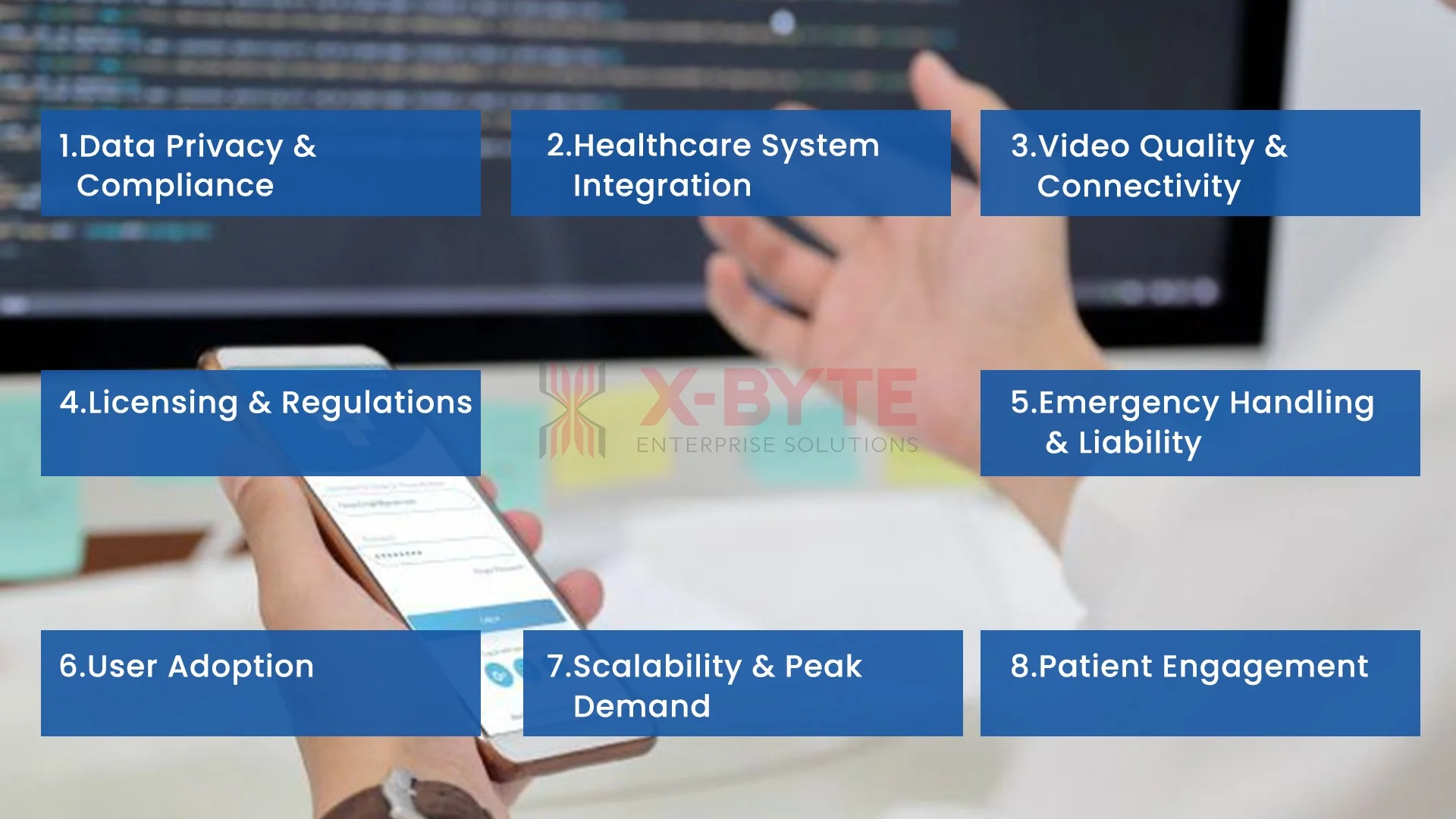
Building a telemedicine app isn’t just about connecting patients and doctors through video calls. It’s more than and here are some of the challenges that you should know right on.
1. HIPAA Compliance and Data Security
Healthcare data breaches can cost millions in fines and destroy patient trust overnight. You’re not just protecting credit card numbers; you’re securing medical records, diagnoses, and prescription data. HIPAA compliance affects data storage, transmission, access control, audit logging, and third-party integrations, making compliance across every touchpoint critical to platform security and credibility.
Solution: Build security into your architecture from day one with end-to-end encryption, regular security audits, and choose a telemedicine app development company with proven HIPAA compliance experience.
2. Integration with Existing Healthcare Systems
Your platform doesn’t exist in a vacuum. It needs to talk to EHR systems, pharmacy networks, insurance databases, lab systems, and billing software. Each one has different protocols, data formats, and security requirements. Poor integration means doctors document everything twice, which kills adoption fast.
Solution: Prioritize robust API integrations and HL7/FHIR standards compliance early in your telemedicine app development process, even if it adds upfront cost.
3. Video Quality Across Variable Connections
Patients don’t all have fiber internet. Your platform needs to work for someone on rural DSL just as well as someone in a city with 5G. Video calls that freeze, drop, or fail make clinical consultations impossible and frustrate everyone involved.
Solution: Implement adaptive bitrate streaming, automatic fallback to audio-only, and choose WebRTC or similar technologies proven for low-bandwidth scenarios.
4. Managing Multi-State Licensing and Regulations
Healthcare software development regulations vary by state and country. Doctors need proper licensing to practice telemedicine across state lines. Prescription rules differ. Insurance coverage changes. If you’re planning to operate nationally, you’re navigating 50 different sets of regulations in the US alone.
Solution: Build geo-fencing and credential verification into your platform, and work with legal counsel familiar with telemedicine regulations during your telemedicine app development services engagement.
5. Handling Emergency Situations and Liability
What happens when a patient needs emergency care during a video consultation? How do you ensure providers can quickly escalate to 911 or local emergency services? The liability concerns around missed diagnoses or delayed emergency response are significant.
Solution: Include clear emergency protocols, quick access to emergency services, proper liability insurance, and comprehensive consent forms that outline telemedicine limitations.
6. User Adoption and Digital Literacy
Your target users might also include 75-year-olds who struggle with smartphones and rural patients who’ve never done a video call. If they can’t figure out how to join a consultation, your platform fails regardless of how good the technology is.
Solution: Design for the least tech-savvy users, provide simple onboarding, offer phone support, and consider SMS-based appointment links that work without app downloads.
7. Scalability During Peak Demand
Healthcare doesn’t happen on a predictable schedule. Flu season, pandemic waves, or even a local news story about a health concern can spike demand 10x overnight. Your infrastructure needs to handle it without crashing or degrading service quality.
Solution: Build on cloud infrastructure with auto-scaling capabilities, conduct load testing before launch, and choose telemedicine app development solutions with proven scalability.
8. Maintaining Patient Engagement Over Time
Getting patients to download your app is one thing. Getting them to use it consistently is another. Healthcare is episodic; people need care, then disappear for months. Keeping your platform top-of-mind without being annoying is challenging.
Solution: Implement features beyond consultations, medication reminders, health tracking, educational content, and preventive care nudges that provide ongoing value.
Quick-Tip: Work with experienced telemedicine app developers who’ve already solved these problems, and you’ll avoid expensive mistakes that sink projects.
Why Choose a Telemedicine App Development Company?
Building a telemedicine app is a healthcare product that must balance user experience, clinical workflows, data security, and regulatory compliance. This is exactly why working with a specialized telemedicine app development company makes a real difference compared to hiring a general app development team.
These are areas where domain expertise matters as much as coding skills.
1. Security and Compliance Are Built-In
In healthcare, security can’t be an afterthought. A professional provider of telemedicine app development services designs systems where data privacy, access control, and patient consent are part of the core architecture, not bolt-on features.
2. Scalable and Future-Ready Architecture
An experienced telemedicine app development company doesn’t just build for today. They design platforms that are flexible, scalable, and ready for the future. Choosing the right partner helps you optimize your telemedicine app development tech stack and avoid costly rebuilds later.
3. They Stay Current with Technology
Healthcare technology moves fast, with new regulations, updated HIPAA guidance, FHIR standards, AI capabilities, and wearable APIs. Staying current requires dedicated focus. Your internal team has other priorities. A telemedicine app development company tracks these changes because it’s their core business.
4. Cost Efficiency
The telemedicine app development cost in 2026 seems high until you calculate what building in-house actually costs: specialized developers, healthcare compliance experts, project management, infrastructure, testing, and the opportunity cost. Most organizations find that custom telemedicine app development with experienced partners costs less overall and delivers better results.
5. Faster Time-to-Market with Proven Processes
Specialized teams come with reusable frameworks, tested workflows, and real-world implementation experience. This shortens development cycles and helps you control telehealth app development cost breakdowns more effectively.
6. Strategic Input, Not Just Development
A strong telemedicine app development partner acts as a technology advisor, not just a vendor. They help you prioritize features, align the app with business goals, and make informed decisions about investments.
If you are looking for the best telemedicine app development company that can help you with end-to-end implementation, then book a free consultation with our team right away.
Future Trends of Telemedicine Apps Beyond 2026!
Telemedicine has already changed how people access healthcare, but beyond 2026, it’s set to become smarter, more connected, and far more proactive.
Let’s get started.
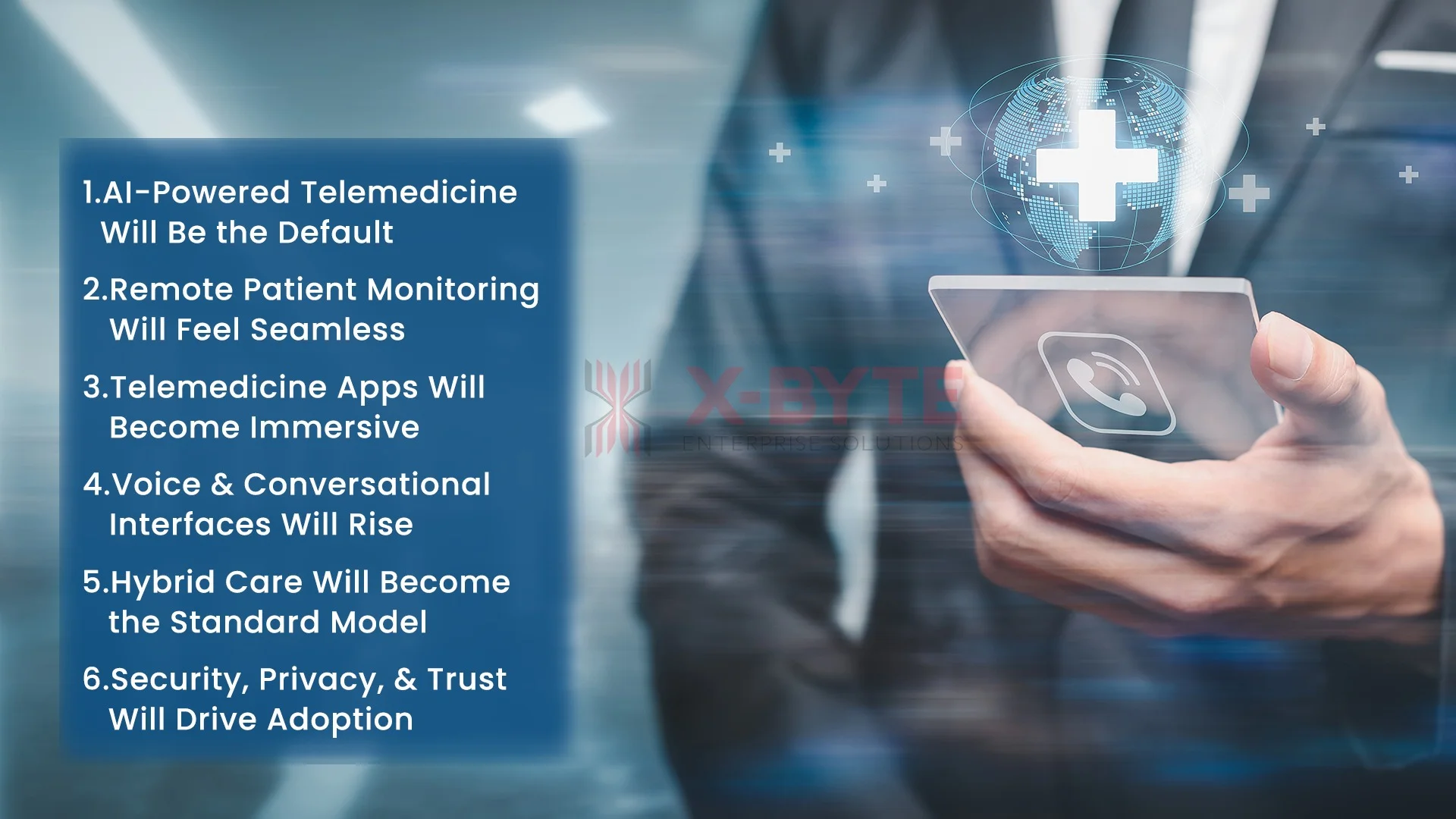
1. AI-Powered Telemedicine Will Be the Default
Future AI-powered telemedicine app development will focus on automation and intelligence across the care journey. Apps will use AI to analyze symptoms, prioritize urgent cases, summarize patient history for doctors, and even predict health risks before they turn serious.
According to MarketsandMarkets, the AI in telehealth and telemedicine market is expected to reach over $27 billion by 2030, which shows how deeply AI will shape telemedicine app development solutions.
2. Remote Patient Monitoring Will Feel Seamless
Remote patient monitoring (RPM) is evolving fast. A report by Fortune Business Insights highlights RPM as one of the fastest-growing segments within telehealth, driven by long-term care needs.
This trend is especially important for chronic conditions, elderly care, and post-surgery recovery. Many healthcare providers are already investing in custom telemedicine app development to support this always-on care model.
3. Telemedicine Apps Will Become Immersive
Video calls are just the beginning. Future telemedicine platforms will increasingly use AR and VR to improve care quality. From virtual physiotherapy sessions to immersive mental health treatments, these technologies will make virtual care feel more human and engaging.
For patients, a virtual doctor consultation app could soon feel like stepping into a digital clinic instead of joining a standard video call.
4. Voice and Conversational Interfaces Will Rise
Typing symptoms and navigating menus won’t always be necessary. Voice-enabled assistants will help patients book appointments, describe symptoms, receive medication reminders, and get follow-up instructions.
This trend will make telemedicine apps more inclusive and easier to use, especially for older users. Many telemedicine app development services are already experimenting with conversational AI to simplify user experiences and reduce friction.
5. Hybrid Care Will Become the Standard Model
Telemedicine isn’t replacing physical healthcare; it’s blending with it. Beyond 2026, hybrid care models will dominate. Initial consultations, follow-ups, and routine monitoring will happen online, while physical visits will focus on diagnostics and procedures.
This shift is one reason healthcare providers are actively looking to develop telemedicine apps for doctors that fit seamlessly into their existing workflows rather than replacing them.
6. Security, Privacy, and Trust Will Drive Adoption
As telemedicine apps handle more sensitive data, security will become a major differentiator. According to IBM’s Cost of a Data Breach Report, healthcare remains one of the most targeted industries, which explains why security investments are rising rapidly in telehealth platforms.
Advanced encryption, role-based access, audit logs, and even blockchain-based medical records will gain traction. Future telemedicine app development solutions will focus heavily on trust, not just regulatory compliance.
Final Thoughts
Building a successful telemedicine app in 2026 isn’t just about video calls and appointment booking anymore. It’s about creating platforms that genuinely solve problems, for patients who need convenient access to care, for doctors who need efficient workflows, and for healthcare organizations that need scalable solutions.
The future of healthcare is digital, personalized, and increasingly intelligent. The platforms being built today will shape how millions of people access care tomorrow. The question is whether yours will be ready.
And, if you want it to be and are looking for professional assistance or looking for an AI-ML healthcare app development company, then our team at X-Byte Solutions can help you out.
To know more about us and how we can help you, book a free consultation right away.